
1. COURSE DESCRIPTION
This course introduces candidates to the strategic role of management accounting as a discipline for planning
and controlling performance so that strategic objectives can be set, monitored and controlled. The course
recognises the impact of external factors on strategic management issues and covers the risks these factors
present and how they can be measured and managed. The course then moves to the application of high-
level performance measurement techniques in a variety of contexts, including not-for-profit organisations
and multinational businesses while adopting the role of an advisor to senior management or independent
clients on how to assess and control the performance of an entity, including the recognition of whether
a business is facing difficulties or possibly failure. The course concludes with corporate failure where
candidates assess whether a business is facing difficulties or possibly failure.
2. REASON FOR THE COURSE
This course aims to apply relevant knowledge, skills and exercise professional judgement in selecting and
applying strategic management accounting techniques in different business contexts to contribute to the
planning, control and evaluation of the performance of an organisation and its strategic and operational
development.
3. STUDY HOURS

4. ROLE IN CURRICULUM
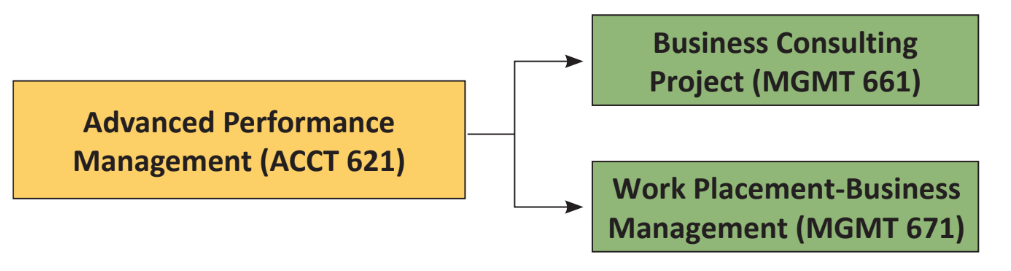
Prerequisites:
The prerequisite for this course is Performance Management.
On successful completion of this exam, candidates should be able to:
A. Use strategic planning and control models to plan and monitor organisational performance
B. Assess the impact of risk and uncertainty on organisational performance
C. Identify and evaluate the design features of effective performance management information and
monitoring systems and recognise the impact of developments in technology on performance
measurement and management systems.
D. Apply appropriate strategic performance measurement techniques in evaluating and improving
organisational performance
E. Advise clients and senior management on strategic business performance evaluation and on recognising
vulnerability to corporate failure
F. Employability and technology skills.
| Knowledge | Level of Learning | Related PLO |
|---|---|---|
| Understand and identify Accounting Techniques (CK2, A, C) Understand and identify changes in accounting techniques due changes in external business environment and information availability. |
Understand | PK1 |
| Explain and apply Performance Management (CK2, A, D) Explain and apply relevant models to identify the business current position in order to manage performance to meet objectives and mission statements. |
Apply | PK1 |
| Cognitive Skills | Level of Learning | Related PLO |
| Prepare, process and present cost Information Management (CC1, A, B) Prepare, process and present cost information to support management planning and decision-making in a variety of business contexts. |
Apply | PC6 |
| Analyse Strategic Budget (CC3, A, D) Analyse different types of budgets suitable for planning and controlling different divisions at different stage of growth. |
Apply | PC6 |
| Navigate Responsibilities Centers (CC4, D) Discuss transfer pricing, divisional performance and reward management in relation to different types of responsibility centres. |
Analyse | PC1 |
| Calculate and interpret Performance Measurement Impact (CC5, F) Calculate and interpret the results of NPV, IRR and MIRR calculations on performance measurement and management. |
Apply | PC3 |
| Communication, Information Technology, and Numerical Skills | Level of Learning | Related PLO |
| Use Excel Proficiency in Financial Analysis (CCIT, F) Use spreadsheet to calculate NPV, IRR and MIRR. |
Apply | PCIT1 |
| Interpersonal Skills and Responsibilities | Level of Learning | Related PLO |
| Develop Professional Skills (CIP1, F) Develop professional skills on presentation, commercial acumen, scepticism and analysis and evaluation. |
Apply | CCIT1, F |
Grades will be determined based on a grading score, calculated using the following assessments and score allocations:
| Topic | CLO Assessment and Scoring | Total CLO Score |
Skill Weighting for Grade |
||
|---|---|---|---|---|---|
| Participation | Take-home case studies (3) |
Final Exam | |||
| Identify and explain Accounting Techniques (CK2, A, C) | 100% | 100% | 20% | ||
| Explain and apply Performance Management (CK2, A, D) | 100% | 100% | 10% | ||
| Prepare, process and present cost Information Management (CC1, A, B) | 50% | 50% | 100% | 20% | |
| Analyse Strategic Budget (CC3, A, D) | 40% | 60% | 100% | 10% | |
| Navigate Responsibility Centers (CC3, D) | 40% | 60% | 100% | 10% | |
| Calculate and interpret Performance Measurement Impact (CC4, F) | 40% | 60% | 100% | 10% | |
| Use Excel Proficiency in Financial Analysis (CCIT1, F) | 40% | 60% | 100% | 15% | |
| Develop Professional Skills (CIP1, F) | 40% | 60% | 100% | 5% | |
This course is primarily lecture, class activities and assignment-based; assigned homework and in-class tests
will support learning to material covered in class. The class will be devoted to lecture, class activities and
exercises and in-class tests.
The course targets the 50 lessons in the study plan below. Each lesson is 1.5 class hours each; there are a total of 75 class hours. The study plan below describes the learning outcome for each lesson, described in terms of what the student should be able to do at the end of the lesson. Readings should be done by students as preparation before the start of each class. Implementation of this study plan may vary somewhat depending on the progress and needs of students.
| Lesson Learning Outcomes | Teaching and Learning Activities, Assessment |
|
|---|---|---|
| 1 |
Introduction
|
Reading: |
| 2 |
Changes in business structure and management accounting
|
Reading: |
| 3 |
Changes in business structure and management accounting
|
Reading: |
| 4 |
Changes in business structure and management accounting
|
Reading: |
| 5 |
Changes in business structure and management accounting
|
Reading: |
| 6 |
Changes in business structure and management accounting
|
Reading: |
| 7 |
Changes in business structure and management accounting
|
Reading: |
| 8 |
Changes in business structure and management accounting
|
Reading: |
| 9 |
Changes in business structure and management accounting
|
Reading: |
| 10 |
Changes in business structure and management accounting
|
Reading: |
| 11 |
Impact of external factors on performance management
|
Reading: |
| 12 |
Impact of external factors on performance management
|
Reading: |
| 13 |
Impact of external factors on performance management
|
Reading: |
| 14 |
Strategic planning and control
|
Reading: |
| 15 |
Strategic planning and control
|
Reading: |
| 16 |
Strategic planning and control
|
Reading: |
| 17 |
Impact of Risk and Uncertainty
|
Reading: |
| 18 |
Impact of Risk and Uncertainty
|
Reading: |
| 19 |
Divisional performance and transfer pricing issues
|
Reading: |
| 20 |
Divisional performance and transfer pricing issues
|
Reading: |
| 21 |
Performance management and control
|
Reading: |
| 22 |
Performance management and control
|
Reading: |
| 23 |
Performance management and control
|
Reading: |
| 24 |
Performance management and control
|
Reading: |
| 25 |
Performance management and control
|
Reading: |
| 26 |
Performance management and control
|
Reading: |
| 27 |
Strategic Performance Measurement
|
Reading: |
| 28 |
Strategic Performance Measurement
|
Reading: |
| 29 |
Strategic Performance Measurement
|
Reading: |
| 30 |
Strategic Performance Measurement
|
Reading: |
| 31 |
Strategic Performance Measurement
|
Reading: |
| 32 |
Strategic Performance Measurement
|
Reading: |
| 33 |
Strategic Performance Measurement
|
Reading: |
| 34 |
Strategic Performance Measurement
|
Reading: |
| 35 |
Strategic Performance Measurement
|
Reading: |
| 36 |
Strategic Performance Measurement
|
Reading: |
| 37 |
Strategic Performance Measurement
|
Reading: |
| 38 |
Strategic Performance Measurement
|
Reading: |
| 39 |
Strategic Performance Measurement
|
Reading: |
| 40 |
Strategic Performance Measurement
|
Reading: |
| 41 |
Strategic Performance Measurement
|
Reading: |
| 42 |
Strategic Performance Measurement
|
Reading: |
| 43 |
Strategic Performance Measurement
|
Reading: |
| 44 |
Strategic Performance Measurement
|
Reading: |
| 45 |
Strategic Performance Measurement
|
Reading: |
| 46 |
Strategic Performance Measurement
|
Reading: |
| 47-50 |
Strategic Performance Measurement
|
Reading: |
Time for the midterm and final examination is not included in the lecture hours above.
Textbook
1. Kaplan Publishing, Advanced Performance Management, (For exams from 1 September 2020 to 30
June 2021).