
1. COURSE DESCRIPTION
This course is designed to give students a thorough understanding of the process of strategic management,
from idea to realization, and an understanding of creating shared value for society, from identification of
underserved markets to impact on social needs. The strategy process for building competitive advantage is
well established. However, the role of business in creating shared value for society by addressing social needs
is a much more recent concept. Since the concept of creating shared value was introduced by Professor
Michael Porter and Mark Kramer in an article in Harvard Business Review in 2011, the role of business in
creating shared value for society has become mainstream management thinking, with widespread potential
and practical implications for both business and society.
This course integrates these two important modern-day concepts into a thorough, but flexible course
supported by both well-established and newly developed frameworks for analysis. This course also has
the flexibility to incorporate complementary themes in management theory and practice, including
contributions from wider aspects of strategy, economics, organizational behavior and behavioral economics.
By drawing on and integrating well-established frameworks with new frameworks and tools of analysis, this
course provides a strong platform for designing and implementing strategies in business, particularly those
aimed at creating shared value. The course also provides the opportunity to apply the wider theoretical
and practical contributions from management science, and from the many case studies that this course
provides.
In addition, students will have the chance to contribute to research into creating shared value and other
areas of management science, as each component (module) of the course will incorporate an assignment
which can contribute surveys, case studies and articles to the existing teaching and research materials
developed by the course. This can include, in some cases, the opportunity to publish work completed (in
the CamEd Journal of Accounting, Finance, Economics and Social Sciences (JAFESS) as part of the course.
2. REASON FOR THE COURSE
This course is taught in a module format in order to be flexible enough to respond to the needs of the
course participants who may have different backgrounds and experience, or who may have studied some of
the course material before. Each component can be taught as a “complete module” (“Full-Monty”), “strong
appreciation” or “bite-size” level. The exact content and mode of teaching will depend on the experience
of the course participants, the material that they may have covered before and on the agreed focus of the
course at the time it is taught..
The course specifications for each module here below represent the scope of what can be taught (“complete
module” format), However, each module is divided into major themes, individual components, and detailed
sections, and so can also be taught at “bite-size” or “good appreciation” level. Whilst the focus of the course
is to ensure that students have a thorough understanding of and ability to apply the process of strategic
management and the concepts of creating shared value, there is flexibility in the course to cover a wider
variety of themes.
So for example, this course can be taught as a strategic management course, or a primarily creating
shared value course, or as a hybrid course incorporating more wider aspects of “organizational behavior”,
“economics” or “behavioral economics”. Equally, the course might include specific aspects of strategy such
as “cluster theory and practice”, or a greater focus on “evaluating the external environment” or “building resources and competences” or “corporate governance” or “leadership”. It could be run as a more analytical
approach or with a greater focus on case studies, depending on the requirements and wishes of the target
audience.
Each of the course modules are summarized here below at their current state of development.The course
structure in Table 1 is set up for the course to be run as “complete modules” for Business Strategy and for
Creating Shared Value. The Cluster Module and the Organizational Behavior modules are included as “Minor
Modules” from which material can be drawn and sessions run if required. These same modules, which can
be taught in this course, can also be used in other courses (mix and match). So, for example, if the course
would benefit from a short (e.g. 30 minutes) overview of Cluster Policy, or Maslow’s Hierarchy of Needs,
then this can be done under the “bite-size”approach, for which summary material is, or is in the process of
being developed. The target is to have the module ready to be shared amongst CamEd faculty. We can also
update and add modules over time. We can also change the focus of teaching to “what’s happening now”
for case studies which students may have done before, if (for example) a significant number in the class
have done the material before.
The flexible approach will suit both executive education and more academically focused students. It can also
be tailored to complement other components of the masters degree course such as valuation of companies
and finance and accounting electives.
A summary of each of the modules comprising this course is below. TABLE 1 shows the structure of the
course, including content, learning outcomes, reading, teaching and learning activities and assessment.
This ensures coverage of all essential content, whilst retaining flexibility. The detailed content of each of the
modules is included in TABLE 2 below. The reading material in the reference list is categorized according to
each Module.
N.B. The Master’s course is likely to comprise mainly CamEd students. Therefore the focus of all 25
sessions will be ALL on students’ presentations. Not lectures.
3. STUDY HOURS

4. ROLE IN CURRICULUM
Prerequisites:
This is a master’s degree course, so students will be expected to be capable of preparing and presenting
high quality assignments in English, and have a good understanding of complementary subjects including
economics, leadership, marketing, law and business ethics. Therefore, before studying this class, students
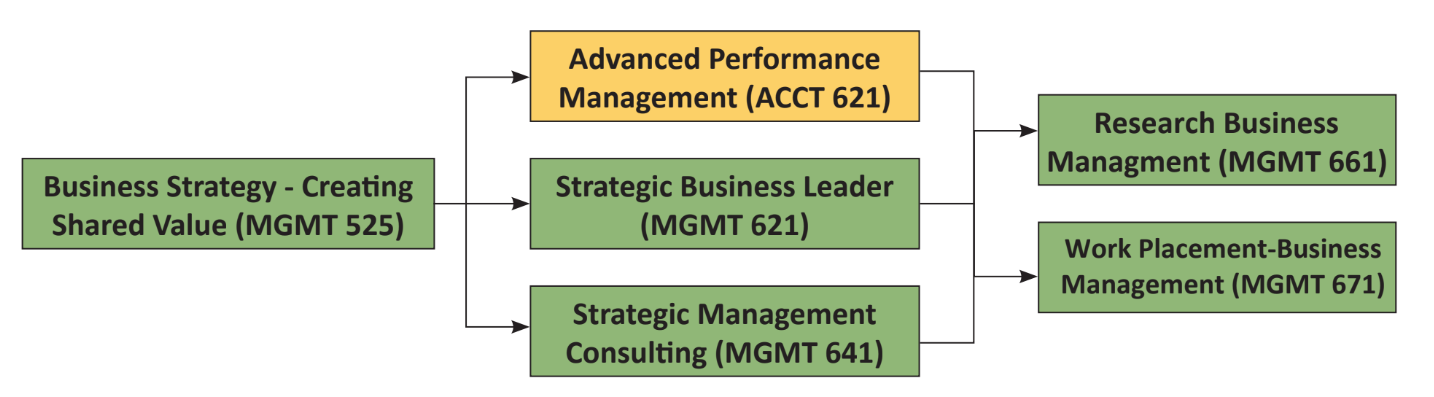
shall have passed 2 out of the following 3 courses:
There are no prerequisites for this course above the general entry requirement for the Master’s Degree
Program.
Upon successful completion of this course students should be able to:
| Knowledge | Level of Learning | Related PLO |
|---|---|---|
| Evaluate how a firm sets its direction (CK2) Evaluate how a firm sets its direction, chooses its business activities, creates strategies and defends its position in a competitive market. |
Evaluate | PC5 |
| Cognitive Skills | Level of Learning | Related PLO |
| Analyze the components of the strategy development process (CC1) Analyze the components of the strategy development process (including shared value strategy). |
Analyze | PC5 |
| Account for complexity and evaluate the need for trade-offs (CC3) Account for complexity and evaluate the need for trade-offs in business world problems. |
Evaluate | PC5, PC6 |
| Communication, Information Technology, and Numerical Skills | Level of Learning | Related PLO |
| Evaluate cases of different (shared value) strategic approaches (CCIT1) Evaluate cases of different (shared value) strategic approaches in the light of external environment and competitive strengths. |
Evaluate | PCIT1, PC5 |
| Create a workable idea for a new or existing business (CCIT2) Create a workable idea for a new or existing business based on all the main components of a shared value strategy. |
Create | PCIT1, PC5 |
| Interpersonal Skills and Responsibilities | Level of Learning | Related PLO |
| Work effectively individually and in teams (CIP1) Work effectively individually and in teams to develop and present feasible shared value strategies. |
Respond | PIP1, PIP2 |
Grades will be determined based on a grading score, calculated using the following assessments and score allocations:
| Topic | CLO Assessment and Scoring | Total CLO Score | Skill Weighting for Grade | |||
|---|---|---|---|---|---|---|
| Participation | In-class tests (3) | Projects | Final Exam | |||
| Evaluate how a firm sets its direction (CK2) | 50 | 50 | 100% | 20% | ||
| Analyze the components of the strategy development process (CK1) | 100 | 100% | 20% | |||
| Account for complexity and evaluate the need for trade-offs (CC3) | 100 | 100% | 10% | |||
| Evaluate cases of different (shared value) strategic approaches (CCIT1) | 100 | 100% | 20% | |||
| Create a workable idea for a new or existing business (CCIT2) | 100 | 100% | 20% | |||
| Work effectively individually and in teams (CIP1) | 100 | 100% | 10% | |||
There are two assignments during this course:
Develop a Strategy
Work Group : Group
Output format : Report & Presentation
Language : English
Assignment : This assignment requires students to develop and present a strategy for an idea that
they have, or a company that they know. It could include, for example, a personal
strategy for managing oneself, or for a new business venture, or revamping an
existing venture, or for a business that is not the student’s own business but is a
company that the students are aware of. It is possible that the assignment can utilize
a company case study that students are undertaking for another course within the
master’s degree program (e.g. on financial analysis). However, the students must
present both pieces of work to ensure that the assignment is original. The assignment
should address each component of the strategy module, from development of vision
and mission, to the assessment of the external environment and of the resources
and competences that the firm and individual have (this will provide a basis for
determining whether the individual or the company really has the basis to succeed.
Some assessment of how the company will be structured and managed is also
important and style of leadership, and governance issues will be marked as part
of the assignment. It is important that the students are encouraged to think about
the whole strategy process, to try to determine whether and how the business will
succeed. The assignment is to be marked on the content and analysis of the strategy
process, not on the success or failure of the idea.
Develop a Shared Value Case Study
Work Group : Group
Output format : Report & Presentation
Language : English
Assignment : The assignment requires students, in groups, to identify and contact one company
to develop a case study of shared value strategy, solely for the purposes of the
assignment. The company should be a Cambodian company (although students are
free to choose a company from another country). On the agreement of the company,
the students will be able to interview the owner, or manager on its shared value
intentions, actions and impact using a preformulated questionnaire. The results of
the questionnaire will be turned into a statistical survey, effectively mapping the
shared value intentions of companies in the country of Cambodia and its regions.
This will be able to be shared with similar surveys across countries. The data (including
comments) from the company will also be turned into a short (two-to-three page)
case study, which will add to the case studies potentially, (subject to agreement by
the firms themselves) available for teaching and for further development as case
studies. The assignment (comprising the completed questionnaire, PowerPoint
Presentation, two-three page case study will be presented at the end of the course
and marks will be given for both content and presentation.
The teaching methodology will aim at promoting critical thinking among the students and stimulating
student participation during the classes. The students’ knowledge will be periodically reviewed by class
presentations and quizzes.
Each component will comprise:
Preparation and Reading in Advance: in order to be able to hold interactive discussions, the students will
be required to read in advance. Usually there will be a requirement to read the book chapter, or academic
paper, or the lecturer’s slides.
Teaching Methods: lectures, PowerPoint slides, Kahoot exercises, Mentimeter or Google Classroom (for a
variety of interactive platforms and classes)
Learning Methods: Specific activities that the students will complete to consolidate their learning, including
group discussions, quizzes and exercises to explore and assess the frameworks and case studies which
comprise the course.
Assessment: The specific way in which the students will be assessed are identified for each component of
the course. This can include assignment, quiz, examination, or participation in the interactive and group
exercises.
The course targets the 25 lessons in the study plan below. Each lesson is 3 class hours each; there are a total of 75 class hours. The study plan below describes the learning outcome for each lesson, described in terms of what the student should be able to do at the end of the lesson. Readings should be done by students as preparation before the start of each class. Implementation of this study plan may vary somewhat depending on the progress and needs of students.
| Session | Lesson Learning Outcomes | Teaching and Learning Activities, Assessment |
|---|---|---|
| Session 1 First part |
Strategy Block 1: Before You Start: Choosing Your Direction Opening Lecture: Scope of the Course: Course Learning Outcomes: CK1, CK2 |
Based on Reading: Chapters 1 & 2 (Thompson, Peteraf et al) Reading: Browse Thompson, Peteraf et al (i.e. understand how the book is structured) Teaching Activity: Lecture / Kahoot on scope of strategy and creating shared value Learning Activity: Group discussion on the purpose of strategy and use of theory and case studies (Group Discussion / Mentimeter) Assessment: Group Exercise (getting to know each other) |
| Session 1 Second part |
Before you Start: What is the aim of your Strategy? Course Learning Outcomes: CK1, CK2, CC1, CC2, CC3, CIP1 |
Reading: Ch 1: Thompson, Peteraf et al Teaching Activity: Lecture / Kahoot on the aims and purposes of strategy Learning Activity: Group discussion on the uses of strategy to focus on a direction (Group Discussion / Mentimeter) Case Studies (Illustration Capsules):
Assessment: Quiz / Group Assignment |
| Session 2 |
Setting your company’s Direction: Course Learning Outcomes: CK1, CK2, CC1, CC2, CC3, CCIT1, CCIT2, CIP1 |
Reading: Ch 2: Thompson, Peteraf et al Teaching Activity: Lecture / Kahoot on what it means to set the direction of your company Learning Activity: Group discussion on different visions and focused mission statements from companies they know (Group Discussion / Mentimeter) Case Studies (Illustration Capsules):
Assessment: Group Exercise or quiz |
| Session 3 |
Strategy Block 2: Evaluating Yourself and Your Environment Evaluating the External Environment: Course Learning Outcomes: CK1, CK2, CC1, CC2, CC3, CIP1, CIP2 |
Based on Reading: Chapters 3 & 4 (Thompson, Peteraf et al) Reading: Ch 3: Thompson, Peteraf et al Teaching Activity: Lecture / Kahoot on the aims and scope of assessing the external environment (particularly PESTEL and 5-Forces) Learning Activity: Group Exercise using PESTEL and 5-Forces Models Case Studies (Illustration Capsules):
Assessment: Group Exercise |
| Session 4 |
Evaluating Yourself: Are you Competitive? Course Learning Outcomes: CC1, CC2, CC3, CIP1 |
Reading: Ch 4: Thompson, Peteraf et al Teaching Activity: Lecture / Kahoot on assessing yourself, your resources and competences Learning Activity: Group discussion on open assessment as a means to choosing the right strategy and avoiding strategic errors (Group Discussion / Mentimeter) Case Studies (Illustration Capsules):
Assessment: Group Exercise or Quiz |
| Session 5 |
Strategy Block 3: Your Strategic Options Your Chosen Strategy: The 5 Generic Strategies: Course Learning Outcomes: CC1, CC2, CCIT1 |
Reading: Ch 5: Thompson, Peteraf et al Teaching Activity: Lecture / Kahoot on the characteristics of the 5 generic strategies Learning Activity: Group discussion on the relevance of the 5 generic strategies today (Group Discussion / Mentimeter) Case Studies (Illustration Capsules):
Assessment: Group Exercise or Quiz |
| Session 6 First part |
Strengthening Your Position: Course Learning Outcomes: CK1, CCIT1, CCIT2 |
Reading: Ch 6: Thompson, Peteraf et al Teaching Activity: Lecture / Kahoot on the realities of strategic moves to strengthen your position Learning Activity: Group discussion on when you would undertake these strategic moves to strengthen your position (Group Discussion / Mentimeter) Case Studies (Illustration Capsules):
Assessment: Group Exercise or Quiz |
| Session 6 Second part |
Expanding into International Markets: Course Learning Outcomes: CK1, CK2, CCIT1 |
Reading: Ch 7: Thompson, Peteraf et al Teaching Activity: Lecture / Kahoot on options and choices for international expansion Learning Activity: Group discussion on international expansion (Group Discussion / Mentimeter) Case Studies (Illustration Capsules):
Assessment: Group Exercise or Quiz |
| Session 6 Third part |
Building a Corporate Strategy: Course Learning Outcomes: |
Reading: Ch 8: Thompson, Peteraf et al Teaching Activity: Lecture / Kahoot Learning Activity: Discussion / Mentimeter Case Studies (Illustration Capsules):
Assessment: Group Exercise or quiz |
| Session 7 First part |
Strategy Block 4: Building and Managing your Organization Building an Organization: Course Learning Outcomes: |
Based on Reading: Chapters 10 to 12 (Thompson, Peteraf et al) Reading: Ch 10: Thompson, Peteraf et al Teaching Activity: Lecture / Kahoot on the requirements for building an effective organization Learning Activity: Group Discussion (Mentimeter) on the key success factors in building a successful and effective organization (Group Discussion / Mentimeter) Case Studies (Illustration Capsules):
Assessment: Group Exercise or Quiz |
| Session 7 Second part |
Managing Internal Organizations: Course Learning Outcomes: |
Reading: Ch 11: Thompson, Peteraf et al Teaching Activity: Lecture / Kahoot on the establishment of procedures to run an effective organization Learning Activity: Group Discussion on the costs and benefits of establishing processes and installing procedures (Group Discussion / Mentimeter) Case Studies (Illustration Capsules):
Assessment: Group Exercise or Quiz |
| Session 8 |
Corporate Culture and Leadership: Course Learning Outcomes: |
Reading: Ch 12: Thompson, Peteraf et al Teaching Activity: Lecture / Kahoot on corporate culture, the importance of building a good culture and the power that a good corporate culture has to be able to drive a successful organization Learning Activity: Group discussion on the merits of building a good culture and the characteristics of what a good culture entails (Group Discussion / Mentimeter) Case Studies (Illustration Capsules):
Assessment: Group Exercise or quiz |
| Session 8 Second part |
Classic Motivational Theories (Extra Class): Students may benefit from the knowledge of classic motivational theories such as Maslow and Hertzberg Course Learning Outcomes: |
Reading: Ch 12: Thompson, Peteraf et al Teaching Activity: Lecture / Kahoot on Maslow’s Hierarchy of Needs and Herzberg’s Hygiene and Motivation Factors Learning Activity: Group discussion on motivation (Group Discussion / Mentimeter) Case Studies: Assessment: Group Exercise or Quiz |
| Session 9 |
Strategy Block 5: Responsibility and Ethics Ethics: Course Learning Outcomes: |
Based on Reading: Chapter 9 (Thompson, Peteraf et al) Reading: Ch 9: Thompson, Peteraf et al Teaching Activity: Lecture / Kahoot on the sources of ethics and the role of ethics in business Learning Activity: Group discussion on ethics in business (Group discussion / Mentimeter) Case Studies (Illustration Capsules):
Assessment: Group Exercise or Quiz |
| Session 10 (First part) |
Corporate Social Responsibility (CSR): Course Learning Outcomes: |
Reading: PowerPoint Presentation taken from Management and Organisational Behaviour by Laurie Mullens and Gill Christy, 10th Edition 2013 Pearson Publishers), Chapter 17: pages 659-692 Teaching Activity: Lecture / Kahoot on CSR for stakeholder groups Learning Activity: Group activity for determining appropriate CSR actions for each stakeholder group (Group Discussion / Mentimeter) Assessment: Group Exercise or Quiz |
| Session 10 Second part |
Example: VW Dieselgate: Course Learning Outcomes: |
Reading: Corporate Governance Failures at Volkswagen, Ch 2 (Page 43); Thompson, Peteraf et al Teaching Activity: Lecture / Kahoot on the Dieselgate Corporate Governance disaster at Volkswagen Learning Activity: Group discussion on the implications of Dieselgate and the implications for Corporate Governance Disaster and its role (Group Discussion / Mentimeter) Assessment: Group Exercise or Quiz |
| Session 11 |
Mid-Term Examination Revision (CCIT1) Course Learning Outcomes: |
Reading: Course materials Teaching Activity: Lecture and review of topics Learning Activity: Students undertake Kahoot and quiz revision lessons. Group discussion on course and exam questions Assessment: n/a |
| Mid-Term Examination | ||
| Session 12 |
CSV Block 8 (1): Shared Value Principles Creating Shared Value Concepts: Course Learning Outcomes: |
Based on Reading: Course materials, HBS Case Studies and Articles Reading: HBS Paper “Creating Shared Value: Competitive Advantage Through Social Impact”: Prof Michael Porter and Mark Kramer (12th December 2018) Teaching Activity: Lecture / Kahoot on the concepts of creating shared value Learning Activity: Discussion / Mentimeter on the concept of creating shared value and the extent that we can measure and use it in practice Assessment: Group Exercise or Quiz |
| Session 13 |
The Social Progress Index (and other indices): Course Learning Outcomes: |
Reading: www.socialprogress.org Teaching Activity: Lecture / Kahoot on the Social Progress Index Learning Activity: Group Discussion on the Social Progress Index. (Group Discussion / Mentimeter) Assessment: Group Exercise and quiz |
| Session 14 First part |
Setting the Assignment: Course Learning Outcomes: |
Reading: Assignment guidelines Teaching Activity: Lecture / Guidance on the assignment and provision of template Learning Activity: Group discussion on assignment (Discussion / Mentimeter) Assessment: The assignment itself |
| Session 14 Second part |
Measuring Shared Value: Course Learning Outcomes: |
Reading: Ken Charman’s Framework Teaching Activity: Lecture / Kahoot on the framework for measuring shared value Learning Activity: Group discussion on the value of measuring shared value (Group Discussion / Mentimeter) Assessment: Group Exercise or quiz Ken’s Framework |
| Session 15 |
The Case Studies Intercorp (Peru) Course Learning Outcomes: |
Based on Reading: HBS Case Studies Reading: HBS Case Study: Intercorp- Peru Teaching Activity: Lecture / Kahoot of the Intercorp case study Learning Activity: Discussion / Mentimeter; students to read part of the case study and answer assignment questions Assessment: Group Exercise or Quiz |
| Session 16 |
Discovery South Africa Course Learning Outcomes: |
Reading: HBS Case Study: Discovery – South Africa Teaching Activity: Lecture / Kahoot of the Discovery Limited Case Study Learning Activity: Discussion / Mentimeter; students to read part of the case study and answer assignment questions Assessment: Group Exercise or quiz |
| Session 17 |
CVS Health Course Learning Outcomes: |
Reading: HBS Case Study: CVS- Redesigning the Customer Value Proposition Teaching Activity: Lecture / Kahoot on the CVS case study Learning Activity: Discussion / Mentimeter; students to read part of the case study and answer assignment questions Assessment: Group Exercise or quiz |
| Session 18 |
Nestle Course Learning Outcomes: |
Reading: HBS Case Study: Nestle: Creating Shared Value Teaching Activity: Lecture / Kahoot on the Nestle Case Study Learning Activity: Discussion / Mentimeter; students to read part of the case study and answer assignment questions Assessment: Group Exercise or quiz |
| Session 19 |
Level 2: Shared Value Created Through Innovations in the Value Chain Walmart Course Learning Outcomes: |
Reading: HBS Case Study: Walmart: Navigating a Changing Retail Landscape Teaching Activity: Lecture / Kahoot on the Walmart Case Study Learning Activity: Discussion / Mentimeter Assessment: Group Exercise or quiz |
| Session 20 |
ENEL: The Future of Energy Course Learning Outcomes: |
Reading: HBS Case Study: ENEL- The Future of Energy Teaching Activity: Lecture / Kahoot on the ENEL Case Study Learning Activity: Group discussion on the strategic move for ENEL to shift to renewable energy resources Assessment: Group Exercise or quiz |
| Session 21 |
Dow: Breakthrough in World Challenges (BTWC) Course Learning Outcomes: |
Reading: HBS Case Study: Dow – Breakthrough in World Challenges Teaching Activity: Lecture / Kahoot on the Dow (BTWC) Case Study Learning Activity: Group discussion / Mentimeter on the Dow strategy to designate certain of its products as BTWC candidates Assessment: Group Exercise or Quiz |
| Session 22 |
Level 3: Shared Value Created Through Innovations in Collaboration Yara International Course Learning Outcomes: |
Reading: HBS Case Study: Yara International (SAGCOT) Teaching Activity: Lecture / Kahoot on the Yara International Case Study Learning Activity: Discussion / Mentimeter on the benefits of collaboration and the shared value created Assessment: Group Exercise or quiz |
| Session 23 |
Novartis (collaboration with the Health Authorities) Course Learning Outcomes: |
Reading: HBS Case Study: Social Business at Novartis (Arogya Parivar) Teaching Activity: Lecture / Kahoot on the Novartis Case Study Learning Activity: Discussion / Mentimeter on the challenges involved in the Arogya Parivar initiative and the shared benefits from collaboration with the Indian Health Authorities Assessment: Group Exercise or quiz |
| Session 23 Second part |
Beckton Dickenson: Global Health Strategy Learning Outcomes: Assess the shared value created for medical products (focusing on the Odon Device), and how this value can be assessed if the financial returns to the company are considered marginal Course Learning Outcomes: |
Reading: HBS Case Study: Beckton Dickenson and the Odon Device Teaching Activity: Lecture / Kahoot on the Beckton Dickenson Odon Device Case Study Learning Activity: Discussion / Mentimeter on whether the Beckton Dickenson strategy is really creating shared value and whether the Odon Device initiative is really profitable Assessment: Group Exercise or quiz |
| Session 24 |
Group Case Study Presentations: Session (1-of 2): The presentations are the output of the student groups’ assignments Learning Outcomes: Apply the principles of shared value to the company interviewed, evaluate the nature and extent of shared value created for the company and for the communities it serves, and present an assessment of the sustainability of a shared value business Course Learning Outcomes: |
Preparation in Advance Group Presentations Maximum 3 groups (30 minutes each) to present their case study in class (through the Kahoot & PowerPoint Interactive Presentation & Quiz) Teaching Activities (How to Teach this)
Learning Activities
|
| Session 25 |
Final Examination Revision Course Learning Outcomes: |
Reading: Course materials Teaching Activity: Lecture and review of topics Learning Activity: Students undertake Kahoot and quiz revision lessons. Group discussion on course and exam questions Assessment: n/a |
| Final Examination |
Textbooks
1. Thompson, A., Peteraf, M., Gamble, J., & Strickland, A. (2021). Crafting and Executing Strategy
(23rd ed.). McGraw-Hill.
References
1. Harvard Business Review (2011). HBR’s 10 Must Reads on Strategy.
2. Michael E. Porter, Competitive Strategy, Free Press, New York, 1980
3. The Strategy Book (2nd Edition): Max McKeown, Pearson 2016 (ISBN: 978-1-292-08440-4 (print),
978-1-292-08443-5 (PDF), 978-1-292-08442-8 (etext) 978-1-292-08441-1 (epub)
Creating Shared Value Component
This course is based on case studies made available by Harvard Business School ‘Creating Shared Value’
Course. These are supported by journal articles on Corporate Philanthropy, Corporate Social Responsibility
and Creating Shared Value. These are listed below.
Harvard Business School Case Studies for Creating Shared Value
1. Yara International: Africa Strategy (715402) (24 pages – 15 pages text)
2. Dow: Breakthroughs in World Challenges (715403) (20 pages – 10 pages text)
3. Social Business at Novartis: Arogyar Parivar (715411) (19 pages – 12 pages text)
4. Discovery Limited (715423) (19 pages – 10 pages text)
5. Nestle’s Creating Shared Value Strategy (716422) (23 pages – 15 pages text)
6. CVS Health: Redefining the Value Proposition (717436) (22 pages – 16 pages text)
7. Walmart: Navigating a Changing Retail Landscape (717474) (23 pages – 16 pages text)
8. Enel: The Future of Energy (718414) (19 pages – 11 pages text)
9. Walmart: Segmenting Social Impact (715435) (4 pages – 3 pages text)
10. Intercorp (718417) (24 pages – 14 pages text)
11. Beckton Dickenson: Global Health Strategy (718406) (24 pages – 15 pages text)
12. DBL Partners: Double Bottom Line Venture Capital
13. National Australia Bank: Looking Out for the Customer
14. Philips Lighting – Light as a Service
15. Generation Investment Management
Additional References
The following are journal articles by Harvard Business School, which are specifically used for the Creating
Shared Value Course.
1. Porter, Michael E., and Mark R. Kramer. “Philanthropy’s New Agenda: Creating Value.” Harvard Business Review 77, no. 6 (November–December 1999): 121–130. View Details
2. Porter, Michael E., and Mark R. Kramer. “Strategy and Society: The Link between Competitive Advantage and Corporate Social Responsibility.” Harvard Business Review 84, no. 12 (December 2006): 78–92. View Details (SUBSCRIBER ONLY)
3. Porter, Michael E., and Mark R. Kramer. “Creating Shared Value.” Harvard Business Review 89, nos. 1-2(January–February 2011): 62–77. View Details (SUBSCRIBER ONLY)
4. Porter, Michael E., and Mark R. Kramer. “The Competitive Advantage of Corporate Philanthropy.”Harvard Business Review 80, no. 12 (December 2002): 56–69. View Details
5. Porter, Michael E., and Mark R. Kramer. “The Pluses in Corporate Philanthropy.”Boston Globe (January13, 2003). View Details
6. Kramer, Mark R., and Marc W. Pfitzer. “The Ecosystem of Shared Value.”Harvard Business Review 94,no. 10 (October 2016): 80–89. View Details
Textbooks and Additional Reading
The textbooks and articles below are for wider reading on business ethics issues.
1. Ferrell et al. Business Ethics: Ethical Decision-Making and Cases. 8th ed. Cengage Learning. 2011.
2. Stanwick et al, Understanding Business Ethics, 3rd ed. Pearson. 2015.
3. BPP, Paper P1: Governance, Risk and Ethics, BPP Publications, 2017.
4. CFA Institute, Ethics and Quantitative Methods, CFA Institute 2018.