
1. COURSE DESCRIPTION
The course enables students to experience the strategy consulting and innovation process, and apply
consulting skills to diagnose strategic issues, design solutions and develop strategy recommendations by
involving selected company executives. The course emphasizes teamwork, critical thinking, and strategic
storytelling, preparing students for professional roles in business consulting and strategy development.
2. REASON FOR THE COURSE
The course addresses the increasing demand for professionals who can tackle complex business problems,
develop actionable strategies, and communicate effectively with executive stakeholders. Students gain
hands-on experience in consulting methodologies, enhancing their employability and capability to drive
strategic change in organizations.
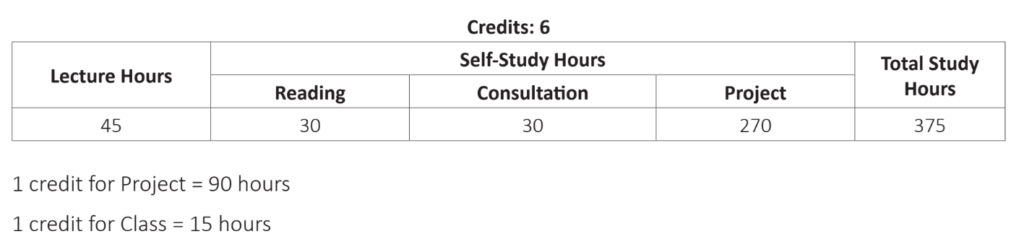
3. STUDY HOURS
4. ROLE IN CURRICULUM
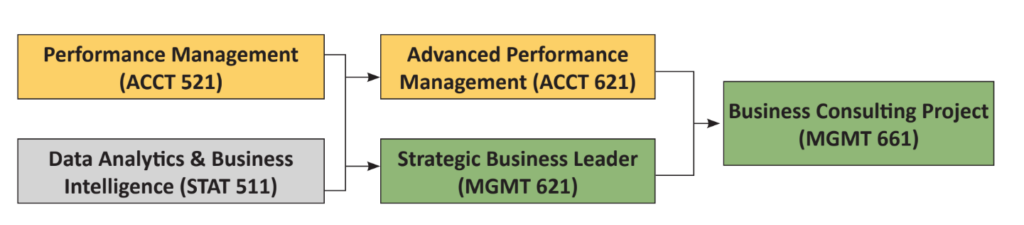
Prerequisites:
To enroll in this course, students are recommended to have successfully completed either:
• Advanced Performance Management ACCT 621; or
• Strategic Business Leader MGMT 621
On successful completion of this course, students will be able to:
| Knowledge | Level of Learning | Related PLO |
|---|---|---|
| Define Strategic issues (CK1) Define strategic issues and innovation with a structured problem-solving approach |
Understand | PK1 |
| Cognitive Skills | Level of Learning | Related PLO |
| Conduct Analysis (CC1) Conduct relevant external and internal analysis through hypothesis development |
Apply | All PCs |
| Design Solutions (CC2) Design solutions to address the client’s strategic issues |
Analyze | All PCs |
| Communication, Information Technology, and Numerical Skills | Level of Learning | Related PLO |
| Communicate Results (CCIT1) Communicate results and recommendations for strategic directions |
CCIT1 | PCIT1 |
| Interpersonal Skills and Responsibilities | Level of Learning | Related PLO |
| Evaluate Personal Learning (CIP1) Evaluate their own personal learning and development whilst working on a consulting project |
Apply | CIP1 |
| SKILL | Assessment | Skill Weighting for Grade | ||
|---|---|---|---|---|
| Participation | Assignment | Consulting Project | ||
| Define Strategic issues (CK1) | 50% | 50% | 10% | |
| Conduct Analysis (CC1) | 25% | 100% | 20% | |
| Design Solutions (CC2) | 100% | 30% | ||
| Communicate Results (CCIT1) | 100% | 30% | ||
| Evaluate Personal Learning (CIP1) | 50% | 10% | ||
Teaching methods include interactive lectures, team-based discussions, bi-weekly deliverables, feedback
sessions, and student presentations. Emphasis is placed on practical application and iterative refinement of
consulting deliverables. During class, approximately 50 percent of the class time is devoted to building up
consulting skills through discussion, presentation, and case studies.
Business Consulting Project
Work Arrangemetn : Team-Based
Output format : Business Presentation and Reporting Format
Language : English
Assignment : Students will engage in the strategy consulting process, applying structured
problem-solving methodologies, strategic frameworks (e.g., PESTEL analysis,
Porter’s 5 Forces, SCQ framework), and innovation Tools. Through teamwork and
individual contributions, students will Diagnose strategic issues, design actionable
solutions, and develop compelling strategy recommendations. Deliverables will
include McKinsey-style presentations, comprehensive analyses, and executive-level
storyboards.
Submission of Report (MoEYS Requirement)
Work Arrangement : Individual/Team-Based
Output format : Comprehensive report detailing project outcomes
Language : English
Assignment : As part of the Ministry of Education, Youth, and Sport (MoEYS) requirements for MSc
completion, students will submit a comprehensive final report detailing their project
outcomes. This report will include: a clear articulation of the identified problem
or opportunity, an explanation of the methodologies and tools applied (e.g., SCQ
framework, logic trees, hypothesis-driven problem-solving), data-driven strategic
recommendations with supporting evidence, and detailed implementation plans,
including timelines and resource allocation.
The course targets the 30 lessons in the study plan below. Each lesson is 3 class hours each; there are a
total of 45 class hours including discussion, presentation, and other class activities. The study plan below
describes the learning outcome for each lesson, described in terms of what the student should be able to
do at the end of the lesson.
| Lesson Learning Outcomes | Teaching and Learning Activities, Assessment | |
|---|---|---|
| 1 | Understand consulting fundamentals, MBTI personality types, and team formation. |
Assessment: Team Page submission |
| 2 | Explore innovation, ESG, AI, and develop industry profiles. |
Assessment: Industry Profile submission |
| 3 | Analyze industries using PESTEL and Porter’s 5 Forces frameworks. |
Assessment: Analysis results submission |
| 4 | Build on macro-environment analysis with advanced facts and figures. |
Assessment: Macro-environment analysis |
| 5 | Learn hypothesis-based problem-solving methodology and McKinsey-style presentations. |
Assessment: Draft slides submission |
| 6 | Define problems or opportunities using SCQ (Situation-Complication-Question) framework. |
Assessment: SCQ pages and governing thoughts |
| 7 | Conduct root cause analysis using Issue and Hypothesis Trees. |
Assessment: Issue/Hypothesis Trees |
| 8 | Explore strategic options and align them with organizational goals. |
Assessment: Refined Hypothesis Trees |
| 9 | Evaluate strategic options and prioritize solutions. |
Assessment: Evaluation results and solution prioritization |
| 10 | Develop actionable recommendations using Pyramid Principle techniques. |
Assessment: Draft solution pages submission |
| 11 | Plan for implementation using MECE principles and resource allocation. |
Assessment: Implementation plans |
| 12 | Reflect critically on the consulting process and refine recommendations. |
Assessment: Final storyboards |
| 13 | Finalize recommendations and ensure presentation alignment with client needs. |
Assessment: Refined presentation slides and storyboards submission |
| 14 | Develop compelling storylines and prepare for final consulting presentations. |
Assessment: Finalized presentations for review |
| 15 | Deliver professional consulting presentations with structured arguments and actionable feedback. |
Assessment: Final presentations (graded) and recognition of exceptional contributions (bonus) |
Textbooks
1. Handbook on Investing in Cambodia 2023 Edition (Council for the Development of Cambodia and
Australia Government: Department of Foreign Affairs and Trade).
2. Cambodia Country Profile: June 2023 (Profitence).
3. Thompson, A. et al. (2017). Crafting & Executing Strategy: The Quest for Competitive Advantage,
21st edition, McGraw-Hill.
References
1. Relevant online resources and handouts provided during the course