
Finance Management (FINC 501)

OVERVIEW

1. COURSE DESCRIPTION

Financial Management is designed to equip students with the skills that would be expected from a financial
manager responsible for the finance function of a business. The course begins with the introduction of the
role and purpose of the financial management function within a business. In addition the course covers the
three key financial management decisions of investing, financing, and dividend policy.

The following section discusses the two stages of investment; investment in working capital and long-
term investments. The next area covers the financing decisions: the examination of the various sources of

business finance, including the dividend policy and internally generated finance. Cost of capital and other
factors influence the choice of capital by the business. In addition, the course covers the valuation of the
business and financial assets, and their impact on the cost of capital. At the end of the course, we examine
the risk and the main techniques used to manage it.

2. REASON FOR THE COURSE

Financial Management examines the theory and practice of corporate investment and financial decisions.
Its aim is to provide an understanding of some of the central decision problems in corporate finance
relating to the daily management of the working capital, the long-term capital investment needed to
replace productive assets, the financing of both short-term and long-term assets, and the dividend policy
decisions. Students will be introduced to financial concepts and theories applied to finance-related issues
encountered by firms in real-life situations focusing upon the role of the Financial Manager and the theory
and skills required to make sound investment and financing decisions. The course deals with the theory and
techniques of financial decision-making in a corporate context. Students will gain an understanding of why
maximising shareholders wealth is regarded as a primary financial objective of a firm. In addition, students
will develop their comprehension of the following key financial decisions – investment, financing, dividends
and risk management – as paramount to creating wealth.

3. STUDY HOURS

4. ROLE IN CURRICULUM
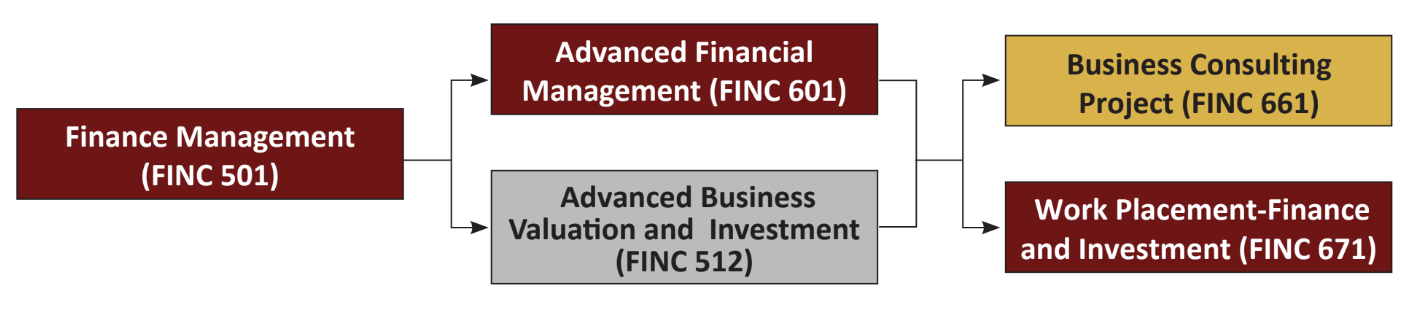

Prerequisites:
There are no prerequisites other than the program entrance requirements.

SKILLS

  • LEARNING OUTCOMES
  • ASSESSMENT AND GRADING
  • TEACHING METHODS
  • STUDY PLAN
  • TEXTBOOKS AND REFERENCES

5. COURSE LEARNING OUTCOMES (CLO)

The learning outcomes for this course cover four main areas in corporate finance: investment decisions, financing decisions, dividend policy decisions and working capital management. On successful completion of this course, students will be able to:

Knowledge Level of Learning Related PLO
Explain theory, concepts, and practice of corporate finance (CK1)
Explain the theory, concepts and practice of corporate financial management function and discuss the impact of economic environment on financial management.
Understand PC1
Discuss working capital management techniques (CK2)
Discuss working capital management techniques in a business organisation.
Understand PC3
Discuss the different techniques of decision-making (CK3)
Discuss the different techniques of financial decision-making in the areas of investment, financing, dividends and risk management that an organisation may apply to maximise shareholders wealth.
Understand PC1
Cognitive Skills Level of Learning Related PLO
Make a Strategic Financial Decision-Making (CC1)
Carry out effective investment appraisal and financing analysis to guide business in making informed decisions to maximise the wealth of the shareholders
Evaluate PC1
Assessing Finance Options and Costs (CC2)
Evaluate alternative sources of business finance and their respective cost to plan business growth and maximise the wealth of shareholders.
Evaluate PC3
Apply Holistic Business Management: Valuation and Risk Strategies (CC3)
Apply principles of business valuation and risk management techniques in business
Evaluate PC1
Communication, Information Technology, and Numerical Skills Level of Learning Related PLO
Leveraging Spreadsheet Proficiency for Financial Analysis (CCIT1)
Use spreadsheets to analyze and demonstrate problem solving and critical skills in analysing financial information such as capital budgeting.
Apply PCIT1
Interpersonal Skills and Responsibilities Level of Learning Related PLO
Develop Team-Based Approaches in Action (CIP1)
Work in a team to perform financial planning and control.
Respond PIP1

6. ASSESSMENT AND GRADING

Grades will be determined based on a grading score, calculated using the following assessments and score allocations:

SKILL CLO Assessment and Scoring Skill Weighting
for Grade
Participation Take-home
case studies (3)
Final
Exam
Explain theory, concepts, and practice of corporate finance (CK1) 100% 10%
Discuss working capital management techniques (CK2) 100% 10%
Discuss the different techniques of decision-making (CK3) 100% 10%
Make a Strategic Financial Decision-Making (CC1) 50% 50% 10%
Assess Finance Options and Costs (CC2) 50% 50% 20%
Apply Holistic Business Management: Valuation and Risk Strategies (CC3) 50% 50% 10%
Leverage the Spreadsheet Proficiency for Financial Analysis (CCIT1) 30% 70% 20%
Develop Team-Based Approaches in Action (CIP1) 40% 60% 10%


7. TEACHING METHODS

This course is primarily lecture based, case study analysis and problem application based on past
examinations published by ACCA for Financial Management paper (F9) and Harvard Business School case
studies. Assigned readings will support learning and serve as a reference to material covered in class. During
class, approximately half of the class will be devoted to lecture with another half of the class working on
case studies and problem sets and reviewing the solutions.

8. STUDY PLAN

The course targets the study plan below. Implementation may vary somewhat depending on the progress and needs of students. For example, some topics may be allocated more or less than 1.5 hours.

  Lesson Learning Outcomes Teaching and Learning Activities,
Assessment
1 The financial management and objectives

  1. Describe the course learning outcomes and assessment
  2. Explain the main objective of financial management (CK1).
  • Lecture
  • Demonstration of financial management
  • Group exercise on the reason for disposing of surplus assets.

Reading:
BPP Text Chapter 1 pp 1-23

2 The financial management and objectives

  1. Describe financial, strategic, business, and operational strategy (CK1).
  2. Calculate and interpret investor and profitability ratios (CK2).
  • Lecture
  • Demonstration measuring achievement of objective
  • Group exercise on investor and profitability ratios

Reading:
BPP Text Chapter 1 pp 1-23

3 The financial management and objectives

  1. Calculate and interpret investor and profitability ratios (CK2).
  2. Describe the 3-E’s in evaluating performance (CK2).
  • Lecture
  • Group case study of Taing Chan Lim Co
  • Group drill and practice on measures of Effectiveness/KPIs

Reading:
BPP Text Chapter 1 pp 1-23

4 The economic environment

  1. Define and identify external, internal and connected stakeholders (CK1).
  2. Describe principles of good corporate governance (CK1).
  • Lecture
  • Demonstration on stakeholder’s theory

Reading:
BPP Text Chapter 2 pp 25-44

5 The economic environment

  1. Define monetary policy and describe the tools of monetary policy and how they are used to manage interest rate, inflation and economic growth (CK1).
  • Lecture
  • Demonstration on government economic objectives

Reading: BPP Text Chapter 2 pp 25-44

6 The economic environment

  1. Define and identify fiscal and exchange rate policy (CK1).
  • Lecture
  • Discussion the effect of fiscal policy to economic

Reading: BPP Text Chapter 2 pp 25-44

7 Investment decisions using non-discounted cash flow methods

  1. Understand the concept of time value of money (CK2).
  2. Calculate, interpret, and make investment decisions based on the basic and discounted payback period (CC2, CCIT1).
  3. Calculate return on capital employed and discuss its usefulness as an investment appraisal method (CC2, CCIT1).
  • Lecture
  • Demonstration of concept time value of money and investment appraisal method with non-discounted cash flow
  • Solving exam question on determining the proposed investment based on ROCE and ARR

Reading: BPP Text Chapter 5 pp 106-134

8 Investment appraisal using discounted cash flow methods

  1. Calculate net present value of cash flows (CK1, CC2, CCIT1).
  2. Decide whether to invest in a project based on the net present value (CC2).
  • Lecture
  • Demonstration of discount cash flow
  • Group drill and practice on new project NPV

Reading: BPP Text Chapter 5 pp 106-134

9 Investment appraisal using discounted cash flow methods (continued)

  1. Identify relevant cash flows in evaluating net present value (CK2, CC2).
  2. Calculate, interpret, and make decisions based on the internal rate of return (IRR) (CC2, CCIT1).
  • Lecture
  • Discussion on concept of IRR
  • Group exercise on the proposed investment based on NPV and IRR

Reading: BPP Text Chapter 5 pp 106-134

10 Capital budgeting under inflation and taxation

  1. Describe the real terms and nominal terms approaches to investment appraisal (CK1).
  • Lecture
  • Discussion on relevant and non-relevant cash flow and inflation

Reading: BPP Text Chapter 6 pp 135-156

11 Capital budgeting under inflation and taxation (continued)

  1. Calculate taxation effects the relevant cash flows (CC2, CCIT1).
  • Lecture
  • Demonstration of capital allowances

Reading: BPP Text Chapter 6 pp 135-156

12 Capital budgeting under inflation and taxation (continued)

  1. Calculate taxation effects the relevant cash flows (CC2, CCIT1).
  2. Calculate and apply before and after discount rates (CC2, CCIT1).
  • Lecture
  • Solving exam question on the proposed investment with nominal cost of discount

Reading: BPP Text Chapter 6 pp 135-156

13 Project appraisal under risk

  1. Adjusting for risk and uncertainty in investment appraisal method (CC1).
  2. Calculate the sensitivity of NPV to changes in inputs, with sensitivity being the change required to reduce NPV to zero (CC2, CCIT1).
  • Lecture
  • Demonstration of risk and uncertainty analysis

Reading: BPP Text Chapter 7 pp 157-200

14 Project appraisal under risk (continued)

  1. Calculate the sensitivity of NPV to changes in inputs, with sensitivity being the change required to reduce NPV to zero (CC2, CCIT1).
  • Lecture
  • Demonstration of sensitivity and probability analysis
  • Group exercise on measure sensitivity of project

Reading: BPP Text Chapter 7 pp 157-200

15 Specific investment decisions (continued)

  1. Describe soft and hard capital rationing (CK2).
  2. Apply an appropriate capital rationing method to select among both divisible and indivisible investments (CC2).
  • Lecture
  • Group problem on capital rationing and stopnability

Reading: BPP Text Chapter 8 pp 173-200

16 Sources of finance

  1. Discuss possible sources of finance for a project, and their advantages and disadvantages (CK2)
  2. Value debt finance and loan schedule (CC2, CCIT1)
  • Lecture
  • Discussion on different sources of finance
  • Group problem on debt valuation

Reading: BPP Text Chapter 9 & 10 pp 201-232

17 Sources of finance (continued)

  1. Calculate the theoretical ex-rights price of shares and evaluate the impact of a rights issue on existing shareholders (CC2, CCIT1).
  2. Describe the advantages and disadvantages of a rights issue (CK1).
  • Lecture
  • Discussion on right issues
  • Group exercise on the effect of right issues to shareholder’s wealth

Reading: BPP Text Chapter 9 & 10 pp 201-232

18 Dividend policy

  1. Describe common dividend policies and determine dividend capacity (CK1).
  • Lecture
  • Demonstrate and didactic questioning on dividend policies

Reading: BPP Text Chapter 9 & 10 pp 201-232

19 Dividend policy (continued)

  1. Describe common dividend policies and determine dividend capacity (CK1).
  • Lecture
  • Demonstrate of dividend policies
  • Group case study analysis

Reading: BPP Text Chapter 9 & 10 pp 201-232

20 Cost of capital

  1. Calculate cost of equity using the capital asset pricing model (CC2, CCIT1).
  2. Calculate the cost of equity using the dividend growth model (CC2, CCIT1).
  • Lecture
  • Discussion and calculate cost of equity by CAPM and DVM
  • Group problem on cost of equity calculation

Reading: BPP Text Chapter 11 pp 233-261

21 Cost of capital (continued)

  1. Calculate the after tax cost of debt (CC2).
  2. Calculate the cost of preference shares (CC2).
  • Lecture
  • Calculate different cost of debt

Reading: BPP Text Chapter 11 pp 233-261

22 Cost of capital (continued)

  1. Calculate weighted average cost of capital (CC2, CCIT1).
  2. De-gear and re-gear beta (CC2, CCIT1).
  • Lecture
  • Demonstrate of WACC
  • Didactic questioning on project specific cost of capital
  • Group exercise on WACC calculation

Reading: BPP Text Chapter 11 pp 233-261

23 Gearing and capital structure

  1. Calculate and evaluate financial and operational gearing (CC2, CCIT1).
  • Lecture
  • Calculate the different types of gearing
  • Group exercise on the effect of new investment to gearing

Reading: BPP Text Chapter 12 pp 263-292

24 Gearing and capital structure (continued)

  1. Describe the basic principles of capital structure theories (CK1, CC1).
  2. Describe the basic principles and limitations of the Miller and Modigliani models of determining optimal gearing (CK1, CC1).
  • Lecture
  • Demonstration of financial structure

Reading:
BPP Text Chapter 12 pp 263-292

25 Gearing and capital structure (continued)

  1. Describe the basic principles and limitations of the Miller and Modigliani models of determining optimal Gearing (CK1, CC2).
  2. Describe the basic principles of pecking order theory (CK1, CC2).
  • Lecture
  • Demonstration of M&M with and without tax
  • Group case study analysis on M&M PIZZA

Reading:
BPP Text Chapter 12 pp 263-292

26 Introduction to working capital management

  1. Calculate and interpret key working capital ratios (CC2, CCIT1).
  2. Identify signs and risks of over trading and over capitalization (CK2).
  • Lecture
  • Demonstration of working capital component
  • Group case study on working capital ratios

Reading:
BPP Text Chapter 3 pp 45-106

27 Introduction to working capital management

  1. Calculate and interpret key working capital ratios (CC2, CCIT1).
  2. Identify signs and risks of over trading and over capitalization (CK2).
  • Lecture
  • Demonstration of working capital component
  • Group case study on working capital ratios

Reading:
BPP Text Chapter 3 pp 45-106

28 Managing working capital

  1. Calculate EOQ and determine the order quantity with a discount (CC1, CCIT1).
  2. Determine inventory re-order levels, minimum inventory, maximum inventory (CC2).
  • Lecture
  • Demonstration of managing inventory
  • Group problem on policy to minimize inventory cost

Reading:
BPP Text Chapter 3 pp 45-106

29 Managing working capital (continued)

  1. Determine inventory re-order levels, minimum inventory, maximum inventory (CC1).
  2. Describe the feature of JIT inventory management (CK2).
  • Lecture
  • Demonstration of managing inventory
  • Solving exam question on inventory management

Reading:
BPP Text Chapter 3 pp 45-106

30 Managing working capital (continued)

  1. Calculate the annualised cost of giving or receiving a settlement discount (CC2, CCIT1)
  2. Decide whether to accept to give or receive a proposed discount (CK2).
  • Lecture
  • Demonstration of receivable management
  • Group drill and practice on settlement discount decision

Reading:
BPP Text Chapter 3 pp 45-106

31 Financing working capital

  1. Decide whether to accept to give or receive a proposed discount (CC2).
  2. Describe factoring and its advantages and disadvantages (CK1).
  3. List the motives of holding cash (CK1)
  • Lecture
  • Solving exam question on proposed policy and factoring offer

Reading:
BPP Text Chapter 3 pp 45-106

32 Financing working capital (continued)

  1. Use the Baumol and Miller-Orr models to determine optimum cash levels (CC2)
  2. Distinguish between system risk and non-systemic risk (CK1)
  • Lecture
  • Demonstration of cash management
  • Group drill and practice on cash flow forecast

Reading:
BPP Text Chapter 4 pp 78-106

33 Financing working capital (continued)

  1. Distinguish between system risk and non-systemic risk (CC1)
  2. Describe the role of treasury and the benefits of centralized treasury (CK2)
  • Lecture
  • Discussion of diversification of risk and treasury management

Reading:
BPP Text Chapter 4 pp 78-106

34 Business valuation

  1. Describe fundamental analysis, technical analysis and random walk theory (CK1, CC1).
  2. Determine the value of a business using the following methods: Dividend valuation model, discounted cash flow, book value, net realisable value, P/E method, earnings yield method (CK1, CC1, CC2, CCIT1).
  • Lecture
  • Discussion on methods to value business

Reading:
BPP Text Chapter 13 293-327

35 Business valuation (continued)

  1. Determine the value of a business using the following methods: Dividend valuation model, discounted cash flow, book value, net realisable value, P/E method, earnings yield method (CK1, CC1, CC2, CCIT1).
  • Lecture
  • Discussion on methods to value business
  • Solving exam question on method of business valuation that appropriate

Reading:
BPP Text Chapter 13 293-327

36 Business valuation (continued)

  1. Determine the value of a business using the following methods: Dividend valuation model, discounted cash flow, book value, net realisable value, P/E method, earnings yield method (CK1, CC1, CC2, CCIT1).
  • Lecture
  • Discussion on methods to value business
  • Solving exam question on method of business valuation that appropriate

Reading:
BPP Text Chapter 13 293-327

37 Business valuation (continued)

  1. Determine the value of a business using the following methods: Dividend valuation model, discounted cash flow, book value, net realisable value, P/E method, earnings yield method (CK1, CC1, CC2, CCIT1).
  • Lecture
  • Discussion on methods to value business
  • Solving exam question on method of business valuation that appropriate

Reading:
BPP Text Chapter 13 293-327

38 Business valuation (continued)

  1. Determine the value of a business using the following methods: Dividend valuation model, discounted cash flow, book value, net realisable value, P/E method, earnings yield method (CK1, CC1, CC2, CCIT1).
  • Lecture
  • Discussion on methods to value business
  • Solving exam question on method of business valuation that appropriate

Reading:
BPP Text Chapter 13 293-327

39 Foreign currency

  1. Forecast exchange rates using interest rate parity and purchasing power parity (CK1, CC2).
  • Lecture
  • Demonstration of exchange rate
  • Group exercise on conversion of foreign currency

Reading:
BPP Text Chapter 14 329-361

40 Foreign currency risk (continued)

  1. Describe and calculate the outcome of both forward contract hedges and money market hedges for exchange rate risk (CK1, CC2, CCIT1).
  • Lecture
  • Discussion of method to hedge foreign exchange rate risk

Reading:
BPP Text Chapter 14 329-361

41 Foreign currency risk (continued)

  1. Describe and calculate the outcome of both forward contract hedges and money market hedges for exchange rate risk (CK1, CC2, CCIT1).
  • Lecture
  • Discussion of international fisher effect and money market hedge
  • Group exercise on foreign exchange risk whether to use forward or money market hedge

Reading:
BPP Text Chapter 14 329-361

42 Foreign currency risk (continued)

  1. Describe and calculate the outcome of both forward contract hedges and money market hedges for exchange rate risk (CK1, CC2, CCIT1).
  • Lecture
  • Discussion of international fisher effect and money market hedge
  • Group exercise on foreign exchange risk whether to use forward or money market hedge

Reading:
BPP Text Chapter 14 329-361

43 Foreign currency risk (continued)

  1. Describe and calculate the outcome of both forward contract hedges and money market hedges for exchange rate risk (CK1, CC2, CCIT1).
  • Lecture
  • Discussion of international fisher effect and money market hedge
  • Group exercise on foreign exchange risk whether to use forward or money market hedge

Reading:
BPP Text Chapter 14 329-361

44 Foreign currency risk (continued)

  1. Describe and calculate the outcome of both forward contract hedges and money market hedges for exchange rate risk (CK1, CC2, CCIT1).
  • Lecture
  • Discussion of international fisher effect and money market hedge
  • Group exercise on foreign exchange risk whether to use forward or money market hedge

Reading:
BPP Text Chapter 14 329-361

45 Team Presentations – Complete Report
(CK1, CC1, CCIT1, CIP1)
Team presentations and feedback
46 Team Presentations – Complete Report
(CK1, CC1, CCIT1, CIP1)
Team presentations and feedback
47 Team Presentations – Complete Report
(CK1, CC1, CCIT1, CIP1)
Team presentations and feedback
48 Team Presentations – Complete Report
(CK1, CC1, CCIT1, CIP1)
Team presentations and feedback
49 Team Presentations – Complete Report
(CK1, CC1, CCIT1, CIP1)
Team presentations and feedback
50 Exam Review

9. TEXTBOOKS AND REFERENCES

Textbook

1. BPP Learning Media, Paper F9 Financial Management, Up to June 2021.
2. BPP Learning Media, Practice & Revision Kit Paper F9 Financial Management, Up to June 2021.

References

1. Kaplan Publishing, Paper F9 Financial Management, Up to December 2021.
2. Watson, D. and Head, A. (2019) Corporate Finance Principles and Practice, Pearson. 8th Edition,
Pearson.
3. Arnold, G. (2009) The Financial Times Guide to Investing, Pearson.
4. Brealey, R. and Myers, S. (2010) Principles of Corporate Finance—Global Edition, McGraw-Hill.
5. Das, S. (2012) Extreme Money: The Masters of the Universe and the Cult of Risk, Pearson.
6. Perks, R. and Leiwy, D. (2010) Accounting: Understanding & Practice, McGraw-Hill.
7. Nofsinger, K., Kim, J.R. and Mohr, D.J. (2010) Corporate Governance, International Edition, Pearson.
8. ACCA Technical Articles: To be assigned in class under selected topics.