
1. COURSE DESCRIPTION
The course intends to develop a research orientation among the students to acquaint them with
fundamentals of research methods. It will expose the students to different types of methodologies used
in various researches for critical analysis. Through designing research framework, collecting and analyzing
data, students will build their skills for the in-company project work, writing and presenting reports, and
writing research for dissertation. Further, with their skills and knowledge, students would be able to apply
appropriate analysis methods to examine the impact of the data on business operations. Thus, in this
course, students would gain hands-on different data collection methods, data analysis and report writing.
2. REASON FOR THE COURSE
The course aims to develop a range of skills among students in formulating research proposals including
framing research questions, developing hypotheses, designing research framework, collecting and analyzing
data, and reporting. Further, students will be able to understand and adhere to appropriate methodology
for conducting research. Throughout the course, the focus is on core concepts underpinning all stages
of the research process to conduct research professionally and produce a ‘good quality’ research output.
Thus, the course is designed to prepare future professionals to employ appropriate research methods in
conducting research for the success of their business ventures.
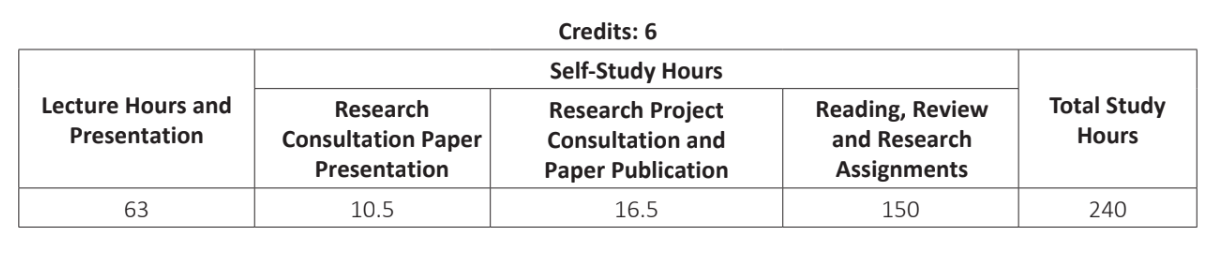
3. STUDY HOURS
4. ROLE IN CURRICULUM
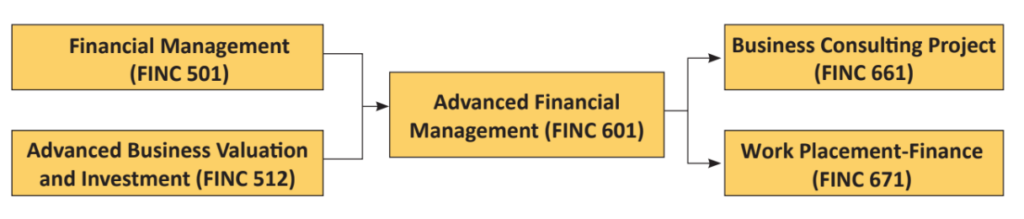
Prerequisites:
To enroll in this course, students must have completed:
• Advanced Financial Management FINC 601
The learning outcomes for this course cover three main areas: The research proposal development, preparation of a research paper for seminar presentation, and conducting of research to produce a research paper for publication. On successful completion of this course, students will be able to:
| Knowledge | Level of Learning | Related PLO | |
|---|---|---|---|
| Describe Types of Business Research (CK1) Describe the types of business research, process of research including broad problem areas and the purpose. |
Understand | PK1 | |
| Describe Knowledge of Research and Managerial Effectiveness (CK2) Discuss the knowledge about research and managerial effectiveness including the population element, population frame, sample, and subject in the research |
Understand | PK1 | |
| Explain Type of Sampling (CK3) Explain different types of sampling in research. |
Understand | PK1 | |
| Cognitive Skills | Level of Learning | Related PLO | |
| Apply Ethics in Business Research (CC1) Apply ethics in business research, use different processes of collecting preliminary data, and extracting information for research. |
Apply | PC1 | |
| Analyze Methods of Research (CC2) Analyze methods of research and obstacles to conducting scientific research in the management area. Also, analyze the conceptual and empirical literature in research. |
Analyze | PC3 PC5 |
|
| Analyze the Theoretical Framework (CC3) Analyze the theoretical framework in research and the process of developing hypotheses for a research including measurement of variables. |
Analyze | PC3 PC5 |
|
| Construct Elements of Research Design (CC4) Construct elements of a research design – type of investigation, unit of analysis, time horizon, and rating scale. Develop the contents of a research report. |
Create | PC3 PC5 |
|
| Communication, Information Technology, and Numerical Skills | Level of Learning | Related PLO | |
| Determine the Representativeness of the Sample Size (CCIT1) Determine the representativeness of the sample size and issues of precision and confidence in its determination including use of software package for data analysis. |
Understand | PCIT1 | |
| Interpret Data (CCIT2) Analyze and interpret data and test the hypothesis. |
Analyze | PCIT1 | |
| Interpersonal Skills and Responsibilities | Level of Learning | Related PLO | |
| Apply Ethical Norms (CIP1) Apply ethical norms and professionalism to conduct research, protect the confidentiality of the respondents, and produce the proposal research, research report including its executive summary. |
Apply | CIP1 | |
Grades will be determined based on a grading score, calculated using the following assessments and score allocations:
| SKILL | Assessment | Skill Weighting for Grade |
|---|---|---|
| Research presentation and Final paper | ||
| Introduction | ||
| Describe the broad problem areas and the purpose, including research questions (CK1) | 100% (Class) | 10% |
| Analyze theoretical framework (CC3) | 100% (Class) | 10% |
| Literature review | ||
| Analyze the conceptual and empirical literature (CC2) | 100% (Report) | 20% |
| Research Methodology | ||
| Construct Research Design (CC4) | 100% (Class) | 5% |
| Develop a Sample Design CK2) | 100% (Class) | 5% |
| Explain type of sampling (CK3) | 100% (Class) | 5% |
| Determine the Representativeness of the Sample Size (CCIT1) | 100% (Class) | 5% |
| Findings | ||
| Interpret Data & prepare the report (CCIT2) | 100% (Report) | 20% |
| Conclusion and Limitations | ||
| Apply Ethics in Business Research (CC1) | 100% (Report) | 10% |
| Apply Ethical Norms (CIP1) | 100% (Report) | 10% |
Research Assignment
Work Arrangment : Individual assignment
Output format : APA Format Report
Language : English
Assignment : Students will develop a research proposal for conduction of the research and to
prepare a research paper for publication. In addition, they are required to carry out
group research to develop a paper for the presentation in a research seminar. To
complete the research assignments successfully, students are required to consult
their instructor.
The assignment involves the following steps:
1. Selecting a topic
2. Conducting a preliminary literature survey
3. Developing a research proposal
4. Conducting research
5. Producing a research paper for presentation and publication
This course uses lectures, research cases, proposal development, seminar presentation and research report
preparation. Students are assigned to read the textbook and research materials in order to support their
learning and produce research papers. During class, approximately 50 percent of the class time is devoted
to building up research skills through proposal writing and presentation including development of research
papers for seminar presentation and publication. Students are encouraged to bring real life problems to
discuss and conduct research for solutions.
The course targets the 50 lessons in the study plan below. Each lesson is 1.5 class hours, for a total of 75 class hours, including conducting research, preparing research seminar papers for presentation, and submitting a research paper for publication. The study plan below describes each lesson’s learning outcome and what the student should be able to do at the end of the lesson. Students should do readings before the start of each class. Implementation of this study plan may vary depending on students’progress and needs.
| Lesson Learning Outcomes | Teaching and Learning Activities, Assessment | |
|---|---|---|
| 1 | Introduction to Research
|
Reading: References: textbook |
| 2 | Scientific Investigation
|
Reading: References: textbook |
| 3 | The Research Process: The Broad Problem Area, Preliminary Data Gathering
|
Reading: References: textbook |
| 4 | The Research Process: Literature Review, Problem Definition
|
Reading: References: textbook |
| 5 | The Research Process: Theoretical Framework
|
Reading: References: textbook |
| 6 | Research Case 1 Problem Statement: Setting Research Questions and Objectives
|
|
| 7 | The Research Process: Hypothesis Development
|
Reading: References: textbook |
| 8 | The Research Process: Elements of Research Design
|
Reading: References: textbook |
| 9 | The Research Process: Elements of Research Design
|
Reading: References: textbook |
| 10 | Measurement of Variables: Operational Definition and Scales
|
Reading: References: textbook |
| 11 | Measurement: Scaling, Reliability, Validity
|
Reading: References: textbook |
| 12 | Research Case 2 Hypotheses formulation, and preparation of research design
|
|
| 13 | Measurement: Scaling, Reliability, Validity
|
Reading: References: textbook |
| 14 | Data Collection Methods
|
Reading: References: textbook |
| 15 | Data Collection Methods
|
Reading: References: textbook |
| 16 | Research Case 3 Preparation of rating scale, and development of questionnaire
|
|
| 17 | Sampling
|
Reading: References: textbook |
| 18 | Sampling
|
Reading: References: textbook |
| 19 | Sampling
|
Reading: References: textbook |
| 20 | Research Case 4 Determination of sample size and sampling
|
|
| 21 | Data Analysis and Interpretation
|
Reading: References: textbook |
| 22 | The Research Report
|
Reading: References: textbook |
| 23 | The Research Report
|
Reading: References: textbook |
| 24 | Research Case 5 Preparation of research layout
|
|
| 25 | Review and preparation for final research proposal |
|
| 26 | Complete Research Proposal Presentations – Small Groups |
|
| 27 | Complete Research Proposal Presentations – Small Groups |
|
| 28 | Complete Research Proposal Presentations – Small Groups |
|
| 29 | Research Seminar
|
|
| 30 | Research Seminar- Paper Preparation by Groups |
|
| 31 | Research Seminar- Paper Preparation by Groups |
|
| 32 | Research Seminar- Paper Preparation by Groups |
|
| 33 | Research Seminar- Paper Preparation by Groups |
|
| 34 | Research Seminar
|
|
| 35 | Research Seminar
|
|
| 36 | Research Seminar
|
|
| 37 | Group Research Project – Preparation of Research Instruments/Tools |
|
| 38 | Group Research Project – Pre-testing of Research Instruments/Tools |
|
| 39 | Group Research Project – Finalization of Research Instruments/Tools |
|
| 40 | Group Research Project – Finalization of Research Instruments/Tools |
|
| 41 | Group Research Project – Field Survey – Data Collection |
|
| 42 | Group Research Project – Data Analysis and Interpretation |
|
| 43 | Group Research Project – Data Analysis and Interpretation |
|
| 44 | Group Research Project – Report Writing |
|
| 45 | Group Research Project – Report Writing |
|
| 46 | Group Research Project – Report Presentation
|
|
| 47 | Group Research Project – Report Presentation
|
|
| 48 | Group Research Project – Refinement of Research Report for Publication |
|
| 49 | Group Research Project – Refinement of Research Report for Publication |
|
| 50 | Review of Group Research Project Submission of Research Paper for Publication |
|
Textbooks
1. Sekaran, Uma. (2003). Research Methods for Business: A Skill Building Approach. John Wiley &
Sons, Inc. New York: USA
References
1. Research reports published by the World Bank, UNDP, IMF, ADB, NBC, and RGC.
2. Selected articles published in professional journals